Confirmation of Polish citizenship by descent
Formal confirmation that you are a Polish citizen through your ancestors: the decision that opens the way to a Polish passport and full EU rights. We assess your line, gather the records and file the application for you.
- Voivode decisionissued by a Polish Voivode
- 6 monthsstatutory deadline for the decision
- Case reviewof your line before the application
Support for confirming Polish citizenship by descent
Assessment first
We check your line against the law in force at each birth before any work begins, and tell you honestly if it is broken.
Records gathered for you
We search Polish registry offices and state archives for the birth and marriage records that link the generations.
Application in Polish
We prepare and file the application to the Voivode and handle all correspondence with the office.
Handled in English
You do not need to speak Polish or travel to Poland. We keep you updated at each stage.
Start with a case review
Every citizenship case starts with a paid review of your line. Tell us about your ancestor; we confirm the review price before any work begins and quote the application from its result.
How it works
You tell us about your line
Which ancestor you descend from, when they left Poland and what documents you already hold. In English.
We assess eligibility
We check naturalisation dates and the other facts that decide whether citizenship passed down unbroken.
We gather records and apply
We obtain the missing records, arrange sworn translations and file the application with the Voivode.
The decision is issued
With a positive decision you can apply for a Polish passport. We can support you with that step too.
What we need from you
- Which ancestor you descend from and when they left Poland
- Any Polish documents you already hold
- Dates and places of birth and marriage in your line
- Whether any ancestor naturalised abroad, and when
- Your country of residence
What breaks the chain?
Polish citizenship passes by descent, with no generation limit, as long as the chain was never broken. The law in force at each birth in the line is what applies.
Naturalisation before 19 January 1951
Under the 1920 Act, acquiring a foreign citizenship caused the loss of Polish citizenship, and the loss extended to the wife and to children under 18.
Foreign army or public office
Under the same Act, joining a foreign army or accepting foreign public office without the consent of the Polish Government also caused the loss of citizenship.
Descent through the mother
Between 1920 and 19 January 1951, a child born in marriage took the father’s citizenship. A Polish mother passed hers on only to a child born outside marriage.
The decisive date
The date of naturalisation relative to the birth of the next generation is usually the decisive fact in the whole case. We check it first.
Military service obligation
Under the 1920 Act, a person obliged to active military service could take a foreign citizenship only with permission; without it, Poland continued to treat them as a Polish citizen. This needs checking case by case.
Emigration in the 1950s and 1960s
Some departures under the emigration procedures of that period involved giving up Polish citizenship. The emigration documents need to be checked.
Confirmation states that you already are Polish
The Voivode’s decision does not grant anything new. It confirms that you have been a Polish citizen all along, because citizenship passed to you from an ancestor. It is the document that opens the next steps.
Ask about your line- 1
Decision from the Voivode
Confirms your Polish citizenship by descent.
- 2
Polish passport
You apply as a Polish citizen; a PESEL number is assigned automatically with the application.
- 3
Rights of an EU citizen
Live, work and study across the EU and EEA, and pass Polish citizenship to your children.
How the procedure works
The rules that decide where the application goes, what it must contain and how long the decision takes.
Which Voivode decides
The Voivode for your place of residence, or your last place of residence, in Poland. If you have never lived in Poland, the Mazovian Voivode in Warsaw decides.
Filing from abroad
The application can be filed with the Voivode directly or through the Polish consul for your place of residence. A representative with a power of attorney may act for you.
What the application covers
Your details and those of your parents and grandparents, with documents confirming them. If documents are very hard to obtain, the law allows the case to proceed without them.
Translations
Documents in a foreign language must be filed with a Polish translation made or certified by a sworn translator or a consul.
Six-month deadline
The Voivode has six months to decide. Time spent waiting for documents from other bodies, suspensions and delays caused by missing documents do not count towards it.
Honest expectations
Complex lines, missing records or ancestry in the former eastern territories take longer. Some cases fail on the naturalisation date, and we would rather tell you at the assessment stage.
Before you order
Short answers to the questions we hear most often.
Legal basis and official sources
- Act of 2 April 2009 on Polish citizenship (ustawa o obywatelstwie polskim), arts 10(3a), 12, 14 and 55–57
- Act of 20 January 1920 on citizenship of the Polish State (Dz.U. 1920 No. 7, item 44), arts 5, 11 and 13; in force until 19 January 1951
- Ministry of the Interior and Administration: Confirmation of possession or loss of Polish citizenship
How far back can descent go?
There is no generation limit, but the chain must be unbroken and documented, and your ancestor must not have lost Polish citizenship before the next generation was born.
What breaks the chain?
Most often naturalisation abroad before 19 January 1951, or service in a foreign army without consent. We check this first.
Do I need to speak Polish or visit Poland?
No. The application can be filed through a representative or a Polish consul, and we handle the procedure on your behalf.
Which office will decide my case?
The Voivode for your place of residence, or last place of residence, in Poland. If you have never lived in Poland, your case goes to the Mazovian Voivode in Warsaw.
What if a record cannot be found?
Where documents are very hard to obtain, the law allows the application to proceed without them. An archival search report helps show that the record was searched for properly.
How long does it take?
Document gathering typically takes two to four months, and the Voivode has six months to decide, not counting time spent waiting for documents. Complex lines take longer.
Documents for your next step
Registration, corrections, name changes and passport document preparation, with an individual quote before paid work begins.
Foreign civil record registration
Have a birth, marriage or death certificate issued outside Poland? We help prepare its registration in the Polish civil register, coordinate the required documents and handle the agreed correspondence in Polish.
Price confirmed after case review
Explore serviceAdministrative case review
Not sure which Polish documents you need or where to begin? Request a quote for an administrative case review, with an agreed document checklist and practical next steps explained in English.
Price confirmed after case review
Explore servicePolish name change support
Use a different name abroad, or need to apply for an administrative change of your Polish first name or surname? We help organise the evidence, prepare the agreed documents and coordinate the administrative steps in English.
Price confirmed after case review
Explore servicePolish passport document preparation
Applying for your first Polish passport, renewing after a name change, or asked for additional Polish records? We help organise the supporting document package before your consular appointment.
Price confirmed after case review
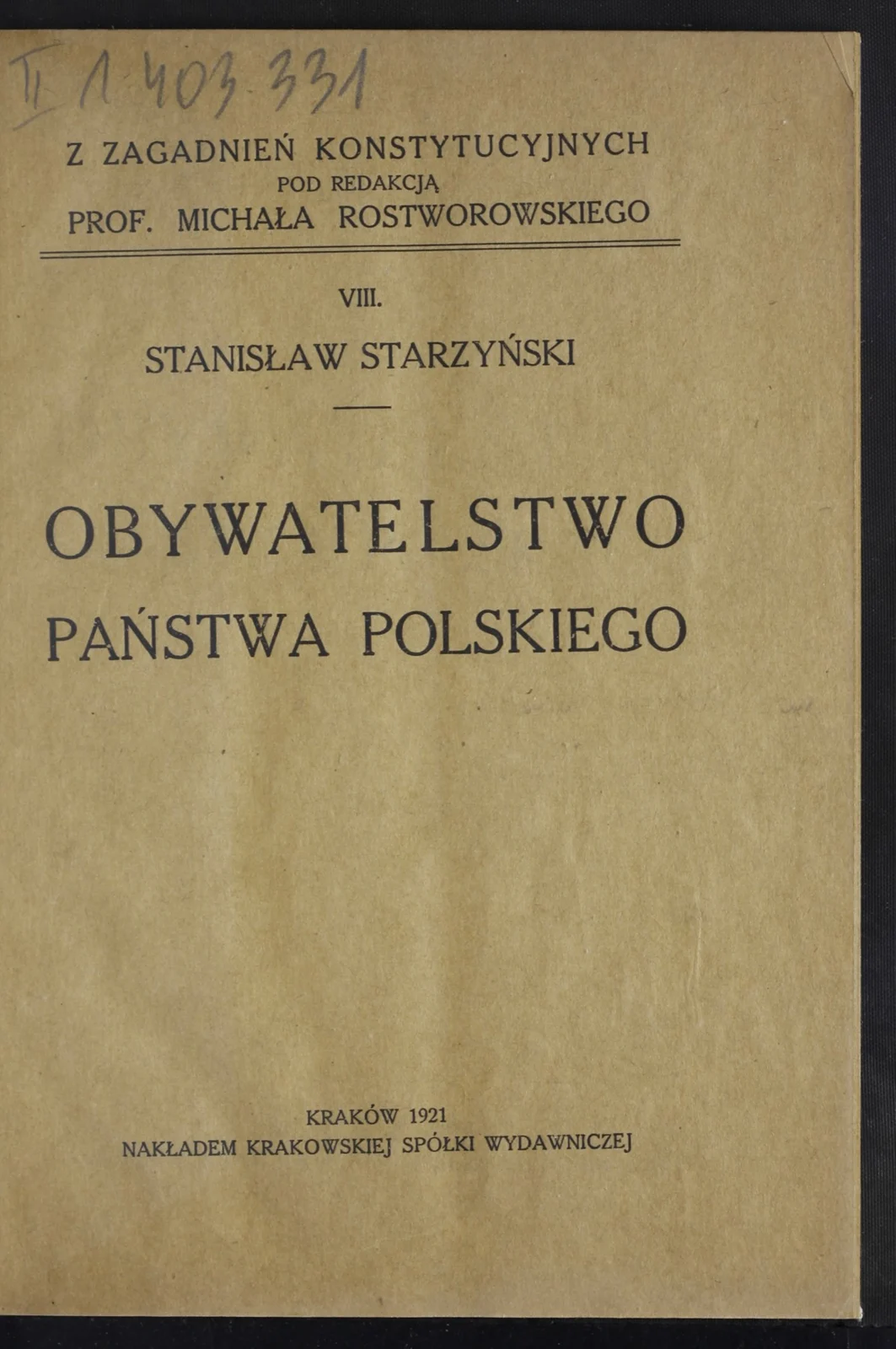
Explore serviceExplore a real Polish library document
Open the image to inspect the details, or follow the source link to explore the full catalogue record. Historical examples provide context; the document you request today follows the current official procedure.